







The use of AI automation in different fields has changed how companies work. It makes them more efficient and competitive.
In areas like logistics, HR, and SaaS, using advanced system development is key. It helps make processes smoother and boosts productivity.
With AI automation, companies can handle repetitive tasks better. This cuts down on mistakes and helps make better decisions.
This article will dive into why system development is vital for logistics, HR, and SaaS businesses. We’ll look at the advantages and how to do it right.
Table of Contents
Key Takeaways
- Understanding the role of AI automation in modern business operations.
- The importance of system development in logistics, HR, and SaaS sectors.
- Benefits of implementing AI automation, including increased efficiency and reduced errors.
- Best practices for integrating AI automation into existing business processes.
- Future prospects of AI automation in driving business innovation.
The Evolution of Business Automation
The journey of business automation is filled with innovation. It has moved from manual processes to advanced AI systems. This change has made businesses more efficient and competitive.
From Manual Processes to Digital Transformation
The history of business automation is marked by key milestones. It started with simple task automation and moved to complex digital transformations.
Historical Progression of Business Process Automation
- Early adopters of automation technology focused on streamlining repetitive tasks.
- The introduction of robotic process automation (RPA) marked a significant shift towards more efficient operations.
- Cloud computing and big data analytics further accelerated the automation journey.
Key Milestones in Automation Technology
The development of machine learning algorithms and artificial intelligence has been crucial. These technologies have enabled businesses to automate complex decision-making processes.
The Rise of AI in Business Operations
The shift from rule-based systems to intelligent systems has changed the game for businesses. AI-powered automation has boosted operational efficiency and helped businesses make data-driven decisions.
Transition from Rule-Based to Intelligent Systems
Intelligent systems can learn from data and adapt to new situations. This makes them more effective than traditional rule-based systems.
Impact of Machine Learning on Operational Efficiency
Machine learning has greatly improved operational efficiency. It allows businesses to automate complex processes and make predictive decisions.

Understanding AI Automation System Development for Logistics, HR, and SaaS Businesses
The world of AI automation is changing how we do business in logistics, HR, and SaaS. It’s key for companies to get how AI automation works to stay ahead.
Defining AI Automation Systems
AI automation systems use artificial intelligence and automation to make work easier. They cut down on manual tasks, boost accuracy, and increase productivity.
Components of Modern AI Automation Platforms
Today’s AI automation platforms have a few main parts:
- Machine learning algorithms for smart predictions and choices.
- Natural Language Processing (NLP) to understand and create text like humans.
- Integration tools for easy connection with other systems.
Differences Between Traditional and AI-Powered Automation
Old-school automation follows set rules and can’t learn. But, AI-powered automation learns from data, adapts, and gets better with time.
Core Technologies Powering Modern Business Automation
The heart of today’s automation is its core tech. Artificial Intelligence (AI) and Machine Learning (ML) lead the way. They help systems analyze data, decide, and forecast.
Artificial Intelligence and Machine Learning Foundations
AI and ML are the base of modern automation. They let systems handle big data, spot trends, and make smart choices.
Integration Capabilities and API Ecosystems
Good integration is key for AI automation success. API ecosystems help link different apps and services. This makes automation smooth and effective.

The Business Case for AI Automation
AI automation offers a strong business case with big returns and a competitive edge. As companies face digital economy challenges, AI automation is key for growth and profit.
ROI Analysis of Automation Implementation
AI automation brings big financial wins through cost cuts and efficiency boosts. It automates tasks, saving on labor and reducing mistakes.
Cost Reduction and Efficiency Gains
AI cuts direct costs by reducing manual labor needs. It also makes operations smoother by streamlining workflows and better using resources.
Long-term Financial Benefits of AI Systems
AI automation offers long-term financial gains. It lets businesses grow faster and adapt to market shifts quickly.
Competitive Advantages in the Digital Economy
AI automation gives businesses a cost edge and a competitive advantage in the digital world. It helps companies get products to market faster and improve customer service.
Speed to Market and Operational Agility
AI lets businesses speed up product development and launch. This way, they can meet market demands and customer needs fast.
Enhanced Customer Experience Through Automation
AI-driven automation offers personalized and efficient customer service. This boosts customer happiness and loyalty.

AI Automation in Logistics: Transforming Supply Chain Management
AI automation is changing logistics by making it more efficient and accurate. It’s making old logistics processes better and more flexible. This change helps meet new demands quickly.
Warehouse Management Automation
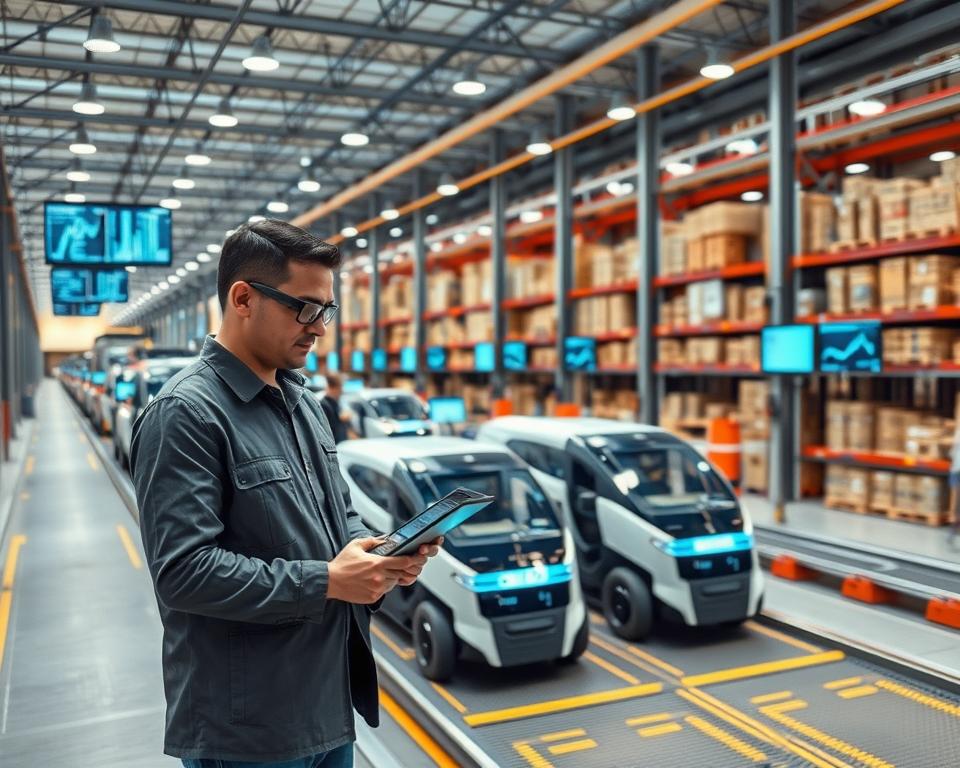
Warehouse management is key in logistics and gets a big boost from AI. Using robots for inventory control, companies can work better and faster.
Robotic Process Automation for Inventory Control
Robotic process automation (RPA) helps manage inventory. It tracks stock and product movements. This cuts down on mistakes and speeds up inventory handling.
Smart Warehousing and Storage Optimization
AI makes warehouses smarter and more organized. It helps use space better and makes finding items quicker. This also cuts down costs.
Route Optimization and Delivery Efficiency
AI helps plan better routes for deliveries. It looks at traffic, road conditions, and more. This makes deliveries faster and uses less fuel.
AI-Driven Transportation Planning
AI finds the best delivery routes by analyzing lots of data. This makes deliveries quicker and helps the environment.
Last-Mile Delivery Automation Solutions
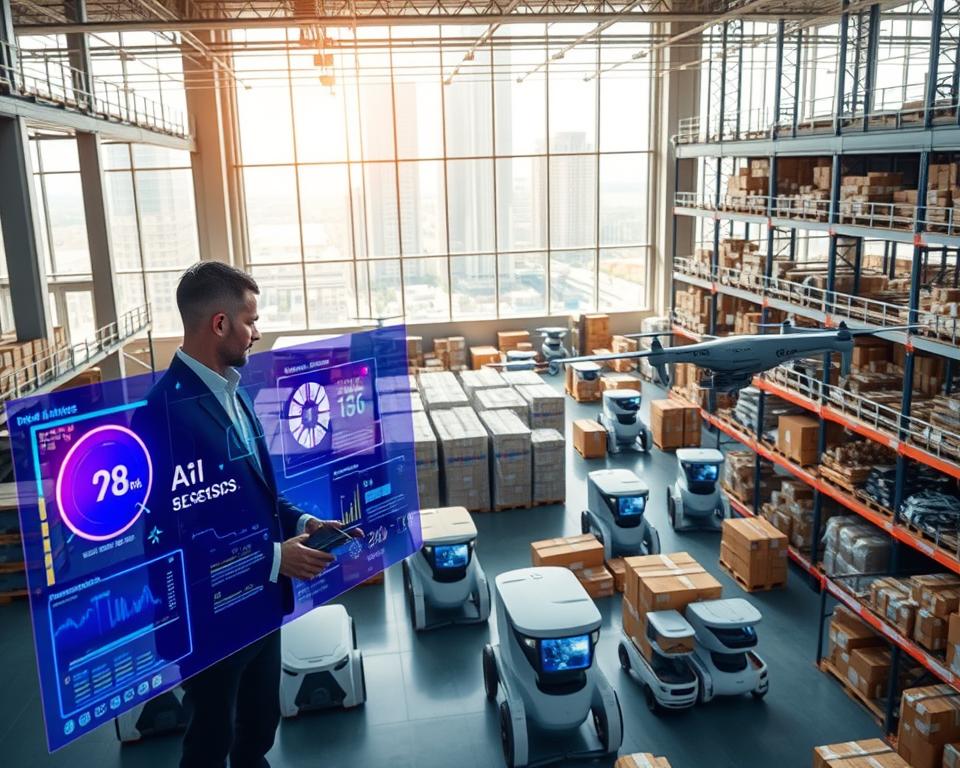
Autonomous vehicles and drones are changing last-mile delivery. They help get packages to you fast, even in busy cities.
Inventory Forecasting and Management
AI improves forecasting and managing inventory. It looks at past data and trends to guess demand. This helps companies manage their stock better.
Demand Prediction Using Historical Data Analysis
- Analyzing historical sales data to predict future demand
- Identifying seasonal trends and patterns
- Adjusting inventory levels accordingly
Automated Reordering and Stock Level Maintenance
Systems can order more stock when it’s low. This keeps inventory levels just right.
Real-World Applications of AI in Logistics Operations
AI is changing logistics from old ways to smart, data-based ones. This change is seen in many parts of logistics, like warehouses and supply chains.
Autonomous Vehicles and Robotics in Warehousing
Autonomous vehicles and robots are making warehouses more efficient and cheaper to run. Self-driving forklifts and material handling systems are now doing tasks that people used to do.
Self-Driving Forklifts and Material Handling Systems
Self-driving forklifts use advanced systems to move things around warehouses accurately. This cuts down on accidents and boosts productivity.
Drone Delivery and Emerging Transport Technologies
Drones are being looked at for last-mile delivery, which is quick and efficient. As drone tech gets better, we’ll see more use in logistics.
Predictive Maintenance for Logistics Equipment
AI is also changing maintenance with predictive tech. Sensor networks and IoT integration help guess when equipment might break.
Sensor Networks and IoT Integration
Sensors give real-time info on how equipment is doing. This lets companies fix things before they break, saving time and money.
Failure Prediction and Preventive Servicing
AI looks at sensor data to guess when equipment might fail. This lets companies do maintenance before it’s needed, avoiding sudden breakdowns.
Blockchain Integration for Supply Chain Transparency
Blockchain is making supply chains more open. Traceability and authentication systems check if products are real and track them.
Traceability and Authentication Systems
Blockchain systems make it easy to track products, cutting down on fake goods. This is key in industries where real products matter.
Smart Contracts for Automated Transactions
Smart contracts make deals happen automatically when rules are met. This cuts out middlemen and speeds up deals.
A logistics expert says, “AI and blockchain will change logistics by making it more open and efficient.” This shows how these techs can change logistics for the better.
HR Transformation Through AI Automation
AI is changing HR by making recruitment, onboarding, and performance management better. This change helps businesses work more efficiently and save money.
Recruitment and Talent Acquisition Automation
AI tools are now a big part of hiring. They help sort through resumes and find the best candidates. Resume Screening and Candidate Matching Algorithms make this process faster.
Resume Screening and Candidate Matching Algorithms
AI algorithms quickly scan resumes to see if they fit the job. This cuts down the time spent on manual checks.
Automated Interview Scheduling and Assessment
AI also helps schedule interviews and do initial tests. This makes hiring quicker and fairer.
Employee Onboarding and Training Systems
AI makes onboarding better by creating Digital Onboarding Workflows and Documentation. These are tailored and efficient.
Digital Onboarding Workflows and Documentation
New employees can do paperwork and training online. This makes starting work easier.
Personalized Learning Paths Through AI
AI helps create learning plans for each employee. This boosts their growth and keeps them engaged.
Performance Management and Analytics
AI changes how we manage performance. It makes Continuous Feedback and Review Automation possible. This helps track how employees are doing and where they can improve.
Continuous Feedback and Review Automation
Now, feedback is given regularly and automatically. This ensures performance reviews are consistent and on time.
Talent Development and Succession Planning
AI analytics spot talent gaps and help plan for the future. This prepares businesses for leadership needs ahead.

Advanced HR Applications of AI Technology
AI is changing how HR works. It makes HR processes more efficient, improves employee experiences, and helps make better decisions with data.
Predictive Analytics for Workforce Planning
Predictive analytics is a key tool in HR tech. It helps predict future workforce needs. It looks at past data and current trends to spot potential issues.
Turnover Prediction and Retention Strategies
AI can spot who might leave, so HR can keep them. This approach lowers turnover and saves money.
Skills Gap Analysis and Future Needs Forecasting
AI helps find skill gaps by comparing current skills to future needs. This lets companies plan training to stay competitive.
Employee Engagement and Retention Strategies
AI boosts employee engagement with advanced analytics and personalized experiences. It uses sentiment analysis and pulse surveys to check satisfaction and find ways to improve.
Sentiment Analysis and Pulse Surveys
Sentiment analysis tools track employee feelings in real-time. Pulse surveys add to this by getting regular feedback.
Personalized Employee Experience Platforms
AI platforms offer personalized experiences for employees. They tailor benefits, training, and development to what each person needs.
Compliance and Risk Management Automation
AI helps automate compliance and risk management. It keeps an eye on regulatory changes and makes sure the company follows them.
Regulatory Adherence Monitoring Systems
AI systems track regulatory changes and alert HR to updates. This keeps the company compliant and avoids fines.
Automated Documentation and Reporting
AI makes documentation and reporting easier. It creates reports and keeps records with little human help.

SaaS Business Operations Enhanced by AI
AI is changing the SaaS world by automating tasks, making customer experiences personal, and improving business processes. This change is key for SaaS companies to work better and stay ahead.
Customer Service and Support Automation
AI is big in customer service and support. It automates these tasks, letting SaaS companies offer support 24/7 without spending more money.
AI Chatbots and Virtual Assistants
AI chatbots and virtual assistants help with customer questions, basic support, and send tough issues to humans. This makes customers happier and gets answers faster.
Ticket Routing and Priority Assignment
AI sorts support tickets by urgency and customer importance, then sends them to the right agents. This streamlines the support process and fixes urgent issues quickly.
Sales and Marketing Process Optimization
AI helps SaaS companies improve sales and marketing. It looks at customer data and behavior to find leads, tailor marketing, and boost sales.
Lead Scoring and Qualification Automation
Lead scoring and qualification are key for sales and marketing. AI does this by looking at data to find the best leads, helping sales teams focus on the most promising ones.
Personalized Content and Offer Generation
AI creates personalized content and offers based on what customers like and do. This makes customers happier and more likely to buy.
Product Development and Feature Prioritization
AI also helps with product development and deciding which features to add first. It looks at user feedback and behavior to guide these decisions.
User Behavior Analysis and Feature Usage Tracking
AI tools track how users use the product, showing which features are popular. This helps make informed decisions about what to improve next.
Automated Testing and Quality Assurance
Automated testing is another area where AI shines. It makes sure products are high quality with fewer bugs, saving time and effort in testing.

Building Scalable AI Solutions for SaaS Companies
As SaaS companies grow, they need scalable AI solutions to stay ahead. Scalability in AI means more than just handling more data. It’s about adapting to business changes without losing performance.
Cloud Infrastructure for AI Deployment
Cloud infrastructure is key for scalable AI. It offers the flexibility and scalability needed for large AI workloads. Containerization and microservices architecture help in efficient deployment and management of AI apps.
Containerization and Microservices Architecture
Containerization packages AI apps into containers for easy deployment. Microservices architecture breaks down apps into smaller, independent services.
Serverless Computing for AI Workloads
Serverless computing is crucial for SaaS companies. It lets them run AI workloads without managing infrastructure. This saves costs and boosts efficiency.
API Integration and Ecosystem Development
API integration is essential for a seamless ecosystem. Third-party service connection strategies help SaaS companies integrate AI solutions with other services, improving functionality.
Third-Party Service Connection Strategies
Connecting with third-party services expands AI capabilities. This offers more comprehensive solutions to customers.
Data Exchange Standards and Protocols
Setting data exchange standards and protocols is vital. It ensures AI systems communicate well within the ecosystem.
Data Security and Privacy Considerations
Data security is a top priority in AI solutions. Encryption and access control systems protect sensitive data.
Encryption and Access Control Systems
Robust encryption and access control keep data secure. This minimizes data breach risks.
Compliance with GDPR, CCPA, and Other Regulations
SaaS companies must follow data protection regulations. Ensuring AI solutions meet these regulations is crucial for customer trust and avoiding legal issues.

Key Technologies Driving AI Automation Systems
Several key technologies are leading the way in AI automation. They are changing how businesses work in many fields, like logistics, HR, and SaaS. This change is big and important.
Machine Learning and Predictive Analytics
Machine learning is a big part of AI automation. It lets systems get better over time by learning from data. Predictive analytics is a part of machine learning. It helps businesses guess what will happen next and make smart choices.
Supervised and Unsupervised Learning Applications
Supervised learning uses labeled data to make predictions. Unsupervised learning finds patterns in data without labels. Both are key for making AI systems work well.
Deep Learning for Complex Pattern Recognition
Deep learning is a special kind of machine learning. It’s great at finding complex patterns in lots of data. This is important for things like recognizing images and understanding speech.
Natural Language Processing for Business Applications
Natural Language Processing (NLP) lets computers understand human language. This is useful for tasks like analyzing text, processing documents, and creating chatbots.
Text Analysis and Document Processing
NLP helps find important information in unstructured data. It also makes document processing easier by automating tasks like data entry and sorting documents.
Conversational AI and Voice Interfaces
Conversational AI, powered by NLP, makes it possible to create smart voice interfaces and chatbots. These can talk to customers and employees in a helpful way.
Computer Vision in Industrial Automation
Computer vision lets machines understand and interpret visual information. This is useful for tasks like checking product quality, finding defects, and recognizing objects.
Quality Control and Defect Detection
In factories, computer vision checks products on the production line. It finds defects and helps keep quality high.
Object Recognition and Tracking Systems
Computer vision also helps with recognizing and tracking objects. This is important for things like robotics and self-driving cars.
| Technology | Application | Industry Impact |
|---|---|---|
| Machine Learning | Predictive Analytics | Enhanced decision-making |
| NLP | Text Analysis | Improved customer service |
| Computer Vision | Quality Control | Increased production efficiency |
Development Methodology for AI Automation Systems
A good development method is key for AI automation systems. It makes the process smooth, efficient, and meets business goals.
Requirements Gathering and Business Process Analysis
The first step is to gather needs and analyze business processes. This includes:
- Process Mining and Workflow Documentation: Understanding and documenting workflows to find areas for automation.
- Stakeholder Interviews and Needs Assessment: Talking to stakeholders to know their needs and expectations from the AI system.
Agile Development for AI Solutions
Agile methods are great for AI projects because they’re flexible and iterative. Key points are:
- Sprint Planning and Iterative Implementation: Breaking work into sprints and improving based on feedback.
- Continuous Integration and Deployment Practices: Making sure the team integrates and deploys code often.
Testing and Quality Assurance for Automation Systems
Testing is vital for AI automation systems. It covers:
- Model Validation and Performance Testing: Checking AI models to make sure they work well under different conditions.
- User Acceptance Testing Strategies: Doing UAT to make sure the system meets needs and is good for users.
| Methodology Stage | Key Activities | Benefits |
|---|---|---|
| Requirements Gathering | Process mining, stakeholder interviews | Clear understanding of business needs |
| Agile Development | Sprint planning, continuous integration | Flexibility, faster time-to-market |
| Testing and QA | Model validation, UAT | Ensures system reliability and performance |
Implementation Strategies and Best Practices
To adopt AI automation, companies need to focus on several key strategies. It’s important to implement AI well to get the most out of it.
Change Management for Automation Adoption
Change management is key when adopting AI automation. It helps the organization adjust to the new changes.
Employee Communication and Engagement Plans
It’s crucial to have clear plans for communicating with employees. They need to understand why AI automation is being adopted and their roles in it.
Resistance Management and Buy-in Strategies
Managing resistance and getting employees on board is vital. Training and involving them in decisions can help.
Training and Skill Development for Employees
Training and skill development are essential. They help employees work well with AI automation systems.
Technical Training for System Users
Technical training for users is important. It ensures they can use and fix AI automation systems effectively.
Upskilling Programs for Displaced Workers
Upskilling programs are great for workers displaced by automation. They help workers learn new skills and adapt to new job demands.
Phased Implementation Approaches
Phased implementation helps reduce risks and ensures a smooth transition to AI automation.
Pilot Programs and Proof of Concept Testing
Pilot programs and proof of concept testing are useful. They let companies test AI solutions in a controlled setting before scaling up.
Scaling Strategies for Enterprise-Wide Deployment
Scaling strategies are crucial for deploying AI automation across the enterprise. They help identify where automation can have the biggest impact.
| Implementation Strategy | Description | Benefits |
|---|---|---|
| Change Management | Preparing the organization for AI automation | Smooth transition, reduced resistance |
| Training and Skill Development | Enabling employees to work with AI automation | Increased productivity, employee adaptability |
| Phased Implementation | Gradual rollout of AI automation | Risk mitigation, improved scalability |
Case Studies: Successful AI Automation Implementations
AI automation has been a game-changer for businesses in logistics, HR, and SaaS. These stories show how it has boosted efficiency and innovation.
Logistics Industry Success Stories
The logistics world has seen big changes thanks to AI. It’s improved warehouse management and fleet optimization a lot.
Major Retailer’s Warehouse Automation Journey
A big retailer used AI to manage its warehouse. This led to a 30% faster order fulfillment and 25% lower costs.
Transportation Company’s Fleet Management Transformation
An AI solution helped a transport company. It cut 20% off delivery times and 15% off fuel use.
HR Department Transformation Examples
AI has changed HR for the better. It’s made recruitment faster and improved employee happiness.
Fortune 500 Company’s Recruitment Automation Results
A Fortune 500 company used AI for hiring. It cut the hiring time by 40% and made candidates happier.
Mid-Size Business Employee Experience Platform
A mid-size business used AI for employee happiness. It saw a 25% boost in employee engagement and 30% faster HR answers.
SaaS Business Operational Improvements
SaaS companies have also seen benefits from AI. It’s helped with customer support and making new products.
Customer Support Automation ROI Analysis
A SaaS company automated its customer support with AI. It saw a 50% drop in support tickets and 20% happier customers.
Product Development Acceleration Through AI
Another SaaS company used AI to speed up product development. It got new features to market 30% faster.
| Industry | AI Automation Implementation | Key Benefits |
|---|---|---|
| Logistics | Warehouse Management System | 30% increase in order fulfillment speed, 25% reduction in operational costs |
| HR | Recruitment Automation Tool | 40% reduction in hiring cycle, improved candidate satisfaction |
| SaaS | Customer Support Automation | 50% reduction in support tickets, 20% increase in customer satisfaction |
Ethical Considerations in AI Automation
AI automation is growing fast, and businesses face many ethical challenges. They must think deeply about how AI affects their work and employees. This includes how AI is developed and its impact on the workforce.
Responsible AI Development Frameworks
Creating responsible AI means making frameworks that tackle bias and ensure openness. This includes:
- Bias Detection and Mitigation Strategies: Using algorithms to find and fix bias in AI choices.
- Transparency and Explainability in AI Systems: Making sure AI systems are clear and their decisions easy to understand.
Workforce Impact and Transition Planning
AI automation changes the workforce, needing good transition plans. Important points include:
- Job Displacement Assessment and Mitigation: Finding out if jobs will be lost and how to lessen this impact.
- New Role Creation and Career Path Development: Spotting new jobs AI creates and planning career paths for them.
By tackling these ethical issues, companies can make AI automation work well for everyone. This ensures it’s good for both the workforce and the business.
Measuring Success: KPIs for AI Automation Projects
The success of AI automation projects depends on measuring their impact with the right KPIs. Organizations need to track important metrics in different areas to gauge performance.
Operational Efficiency Metrics
Operational efficiency is key in AI automation. Important metrics include:
Process Cycle Time Reduction Measurement
Tracking how AI automation reduces process cycle time shows how it streamlines operations.
Error Rate and Quality Improvement Tracking
Monitoring error rates and quality improvements shows AI automation’s impact on quality.
Financial Performance Indicators
Financial metrics are crucial for evaluating AI automation’s ROI. Important indicators include:
Cost Savings and Revenue Growth Attribution
Understanding cost savings and revenue growth from AI automation is key to its financial impact.
Return on Investment Calculation Methods
Using solid ROI calculation methods is vital for assessing AI automation’s financial value.
| Financial Metric | Description | Importance |
|---|---|---|
| Cost Savings | Reduction in operational costs due to AI automation | High |
| Revenue Growth | Increase in revenue attributed to AI automation | High |
| ROI | Return on Investment calculation for AI automation projects | Critical |
Employee and Customer Satisfaction Benchmarks
It’s important to understand AI automation’s impact on employee and customer satisfaction. Relevant benchmarks include:
User Experience Measurement Techniques
Using user experience measurement techniques helps assess AI automation’s impact on end-users.
Adoption Rate and Engagement Metrics
Tracking adoption rates and engagement metrics shows how well AI automation solutions are received and used.
By focusing on these KPIs, organizations can fully evaluate AI automation project success. This helps make informed decisions for future projects.
Future Trends in AI Automation for Business
The future of AI automation in business is set for big changes. As tech gets better, how AI automation is used will change a lot.
Emerging Technologies on the Horizon
New technologies will be key in AI automation’s future. These include quantum computing and edge AI.
Quantum Computing Applications in Business Automation
Quantum computing could change AI automation a lot. It will give AI amazing power to solve complex problems and analyze data.
Edge AI and Distributed Intelligence Systems
Edge AI makes AI smarter by putting it closer to data. This cuts down on delays and makes decisions faster. It’s expected to make automation better in many fields.
Industry-Specific Automation Innovations
AI automation is being used in different ways across industries. Each industry is finding its own special way to use AI.
| Industry | Automation Innovation |
|---|---|
| Logistics | Predictive maintenance and route optimization |
| HR | AI-driven recruitment and talent management |
| SaaS | Automated customer service and support |
The Evolving Role of Human Workers
As AI automation grows, human roles are changing. New ways of working with AI are being developed.
Human-AI Collaboration Models
These models aim to use the best of both humans and AI. They make workflows more efficient and effective.
Conclusion
AI automation is changing the game in many industries, like logistics and HR. It’s also making a big impact on SaaS businesses. By using AI, companies can make their operations smoother, work more efficiently, and come up with new ideas.
AI technologies like machine learning and natural language processing are changing how businesses work. They make companies more flexible and competitive in the digital world.
The future of AI in business looks bright. As AI gets better, we’ll see even more ways it can help businesses grow. Companies that use AI will be ready for changes in the market, make customers happier, and stay ahead of rivals.
To stay ahead, businesses need to focus on AI automation and keep up with new tech. This way, they can find new chances for growth, succeed in the long run, and thrive in a tough business world.