







The use of Artificial Intelligence in SaaS Development is changing how businesses work.
With Machine Learning, companies can automate tasks, make customer service better, and get important data.
AI-Powered SaaS is key because it brings new ideas, makes things more efficient, and saves money.
Table of Contents
Key Takeaways
- AI-Powered SaaS makes business operations better by automating tasks.
- Machine Learning helps improve how customers are treated.
- AI-Powered SaaS leads to new ideas and better efficiency.
- It helps businesses get useful data.
- Adding AI to SaaS cuts costs and boosts productivity.
The Evolution of SaaS and AI Integration
The mix of SaaS and AI is changing the software world. It brings new levels of smarts and automation. This change has made SaaS platforms better and opened new tech paths for businesses.

From Traditional SaaS to AI-Enhanced Solutions
Old SaaS apps mainly offered software on demand over the internet. But AI has made them smarter. Now, they use AI for things like predicting trends and understanding language.
This shift helps businesses make better choices and simplify tasks.
Key Milestones in AI-SaaS Convergence
AI and SaaS coming together has hit some big marks. We’ve seen AI chatbots, tools for predicting maintenance, and personalized suggestions. These steps have made SaaS apps more useful and user-friendly.
As AI keeps growing, we’ll see even more cool stuff in SaaS.
Understanding AI-Powered SaaS Platforms
AI is making SaaS platforms smarter and more user-friendly. It’s not just adding AI features. It’s changing the whole SaaS world to be more intuitive and valuable.
Defining AI-SaaS Architecture
The AI-SaaS Architecture combines many technologies. At its heart, it supports machine learning, natural language processing, and data analytics. These are key for SaaS.
Core Components and Technologies
The Core Components of AI-SaaS include advanced data storage and AI models. These work together for predictive analytics and personalized experiences.

| Component | Description | Benefit |
|---|---|---|
| Machine Learning Models | Integrates AI for predictive analytics | Enhanced decision-making |
| Data Storage | Scalable storage for large datasets | Improved data management |
| Processing Pipelines | Efficient data processing | Faster insights generation |
How AI Transforms Traditional SaaS Offerings
AI Transformation in SaaS goes beyond adding features. It changes how SaaS apps work and deliver value. AI makes them proactive, offering predictive maintenance and personalized experiences.
The Current Market Landscape for AI-SaaS Solutions
The AI-SaaS market is growing fast. This is thanks to new tech and more demand for smart software. It’s key to know the current market.
Market Size and Growth Projections
The AI-SaaS market has grown a lot lately. Reports say it will grow 45% from 2023 to 2028. It’s expected to hit $100 billion by 2028. This growth comes from more businesses using AI.
Key statistics:
- Current market size: $15 billion (2023)
- Projected market size: $100 billion (2028)
- CAGR: 45% (2023-2028)
Leading Players and Competitive Analysis
The AI-SaaS market is getting more competitive. Big names like Salesforce, Microsoft, and IBM are leading. They’re spending a lot on AI research to improve their software.

Looking at the competition, companies are working on better AI and adding AI to their software. This is how they stay ahead.
Industry-Specific Adoption Trends
Different industries are adopting AI-SaaS at different speeds. Finance and healthcare are early adopters. They use AI for fraud detection and predictive analytics. Retail and manufacturing are starting to use AI too, to improve efficiency and customer service.
| Industry | Adoption Rate | Primary Use Cases |
|---|---|---|
| Finance | High | Fraud detection, risk management |
| Healthcare | High | Predictive analytics, patient care |
| Retail | Medium | Customer service, inventory management |
Strategic Benefits of AI-Powered SaaS Platforms
AI-powered SaaS platforms bring many benefits, like better business insights and more personalized customer experiences. As companies use AI, they see big wins that boost their profits and keep them ahead.

Enhanced Business Intelligence and Decision Making
These platforms offer advanced analytics and insights. They help businesses make smart choices. With machine learning and data analysis, they spot trends and patterns that humans might miss.
This smart business insight lets companies predict market shifts. They can then adjust their plans to stay competitive.
Operational Efficiency and Automation
AI-powered SaaS makes automating routine tasks easy. This boosts efficiency. Tasks like data entry and customer service get done faster, with fewer mistakes.
It also lets companies streamline their operations. They become quicker to adapt to market changes.
Personalization and Customer Experience Improvements
AI-powered SaaS helps businesses give personalized experiences. They use customer data to tailor their services. This makes customers happier and more loyal.
Personalized experiences lead to customer loyalty. This is key for long-term growth and more sales.
AI-Powered SaaS Platforms Development Process
Creating AI-Powered SaaS platforms is a detailed process. It combines strategic planning, advanced technology, and ongoing improvement. This ensures the product is not just new but also meets changing user needs.
Discovery and Strategic Planning
The first step is crucial. It involves deep discovery and strategic planning. This phase sets the project’s goals, scope, and challenges.
Market Research and Opportunity Identification
Market research is key to finding opportunities and understanding the competition. It looks at trends, customer needs, and entry barriers.
Business Model and Value Proposition Definition
Creating a solid business model and value proposition is essential. It makes sure the platform meets market needs and can make money.
Architecture and Technical Design
This phase builds the AI-Powered SaaS platform’s foundation. It chooses technologies, designs the system, and plans for growth and security.
Important things to consider are:
- Choosing the right cloud infrastructure
- Designing a microservices architecture
- Ensuring data governance and compliance
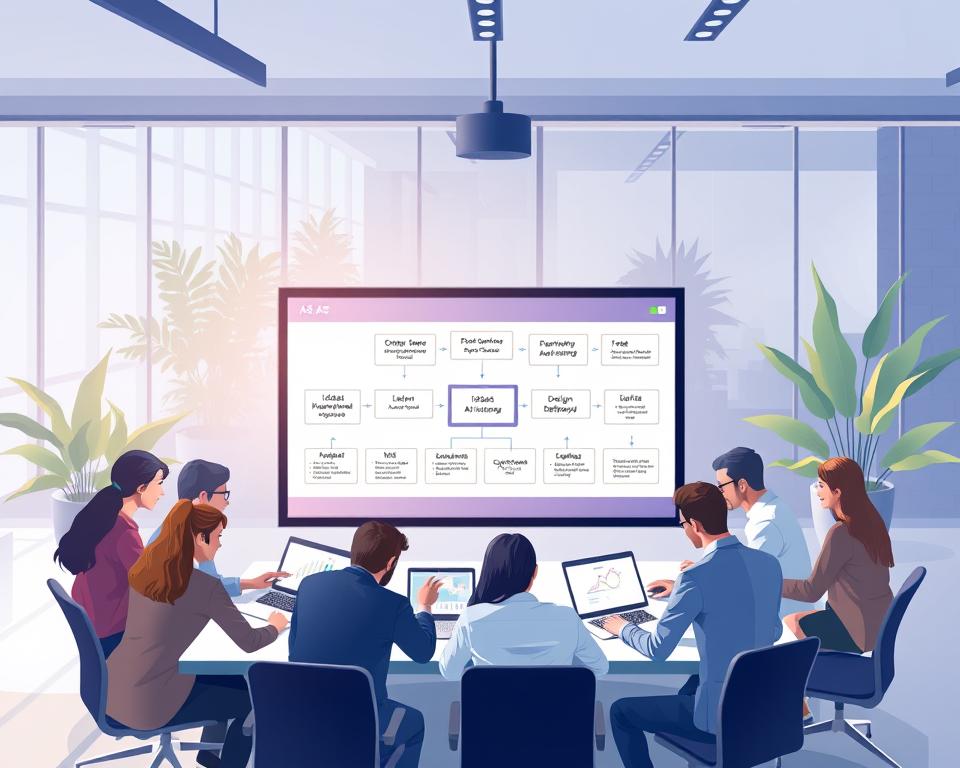
Development and AI Integration
The development phase is where the platform is built. It adds AI and machine learning to improve its features and user experience.
Key tasks include:
- Building the core application features
- Adding AI models for predictive analytics
- Implementing natural language processing
Testing, Deployment, and Continuous Improvement
After development, the platform is tested to meet standards. Then, it’s deployed and improved continuously. This involves user feedback and adding new features.
Important parts of this phase are:
- Conducting thorough quality assurance testing
- Deploying on scalable infrastructure
- Monitoring performance and user engagement
Essential Technologies for Building AI-SaaS Solutions
Several key technologies are crucial for AI-SaaS development. They help create advanced, AI-powered SaaS platforms. These platforms can greatly improve business operations.
Machine Learning Frameworks and Libraries
Machine Learning (ML) is vital for AI-SaaS solutions. ML frameworks and libraries give the tools needed for developing and deploying ML models.
Supervised Learning Applications
Supervised learning trains models on labeled data. It’s used for predictive maintenance and predicting customer churn.
Unsupervised and Reinforcement Learning Use Cases
Unsupervised learning finds patterns in unlabeled data. Reinforcement learning lets models learn from their environment.
Deep Learning Integration
Deep Learning is a part of ML that uses complex neural networks. It’s great for tasks like image and speech recognition.
| ML Framework | Primary Use | Notable Features |
|---|---|---|
| TensorFlow | Deep Learning | Extensive community support, flexible architecture |
| PyTorch | Deep Learning | Dynamic computation graph, rapid prototyping |
| Scikit-Learn | Traditional ML | Simple, efficient tools for data analysis |
Natural Language Processing Capabilities
Natural Language Processing (NLP) lets AI-SaaS platforms understand and create human language. NLP is key for chatbots, sentiment analysis, and text summarization.
“NLP has revolutionized the way businesses interact with their customers, enabling more personalized and efficient communication.”
NLP can be improved with libraries like NLTK and spaCy. They offer tools for text processing and entity recognition.

Computer Vision and Image Recognition
Computer Vision lets AI-SaaS platforms understand visual data from images and videos. It’s essential for facial recognition, object detection, and medical imaging analysis.
Computer Vision can be used with frameworks like OpenCV and TensorFlow. They provide tools for image processing and analysis.
Data Architecture for AI-Powered SaaS Platforms
Data architecture is key for AI-powered SaaS solutions. It organizes data from start to finish, making sure it’s right, easy to get, and safe.
Data Collection and Ingestion Strategies
Getting data right is vital for AI SaaS platforms. They collect data from users, outside sources, and IoT devices. A good plan for getting and using data helps make quick decisions.
Storage Solutions and Processing Pipelines
Choosing the right storage solutions and processing pipelines is important. Cloud storage is flexible and scalable. It helps process data fast for analytics.

Data Governance, Security, and Compliance
Data governance and security are crucial. Good policies keep data correct, follow rules, and protect it from hackers. This includes encrypting data and checking security often.
A strong data architecture helps AI SaaS platforms manage data well. It sets a good base for AI insights and smart decisions.
Scalability and Performance Optimization
Scalability and performance are key for AI-Powered SaaS platforms to succeed. They must grow efficiently and keep high performance. This is important for handling more traffic, data, and user needs.
Cloud Infrastructure Considerations
Cloud infrastructure is crucial for scalability. Cloud providers offer scalable resources that adjust to platform needs. This ensures growth without losing performance. When choosing a cloud, consider geographic distribution, data storage, and computing power.

Microservices Architecture Benefits
Using a microservices architecture boosts scalability. It divides the app into smaller services. Each can grow as needed, improving resilience and upkeep.
Load Balancing and Resource Management
Load balancing spreads workload evenly, avoiding bottlenecks. Good load balancing and resource management keep performance high. This way, the platform can grow and stay efficient.
By focusing on cloud, microservices, and load balancing, AI-Powered SaaS platforms can meet growing demands. They stay competitive and maintain top performance.
AI Model Training and Deployment Strategies
To make the most of AI, SaaS platforms need strong training and deployment plans. This means getting data ready, picking the right model, and keeping learning.
Data Preparation and Feature Engineering
Getting data ready is key in AI training. It means cleaning and preparing data so it’s right and useful. Creating new features from old ones is also important. It helps the model learn and predict better.
The data’s quality affects the AI model’s performance. So, using good data validation and prep is crucial.

Model Selection and Training Methodologies
Picking the right AI model is essential for SaaS success. It’s about looking at machine learning algorithms and picking the best one for the job. How you train the model is also important. It affects how well it learns from data.
| Model Type | Training Methodology | Use Case |
|---|---|---|
| Supervised Learning | Labeled data training | Predictive maintenance |
| Unsupervised Learning | Clustering algorithms | Customer segmentation |
| Reinforcement Learning | Reward-based training | Dynamic pricing |
Continuous Learning and Model Updating
AI models need to keep learning to stay accurate and useful. This means setting up continuous learning to learn from new data and adapt to changes.
Regular updates also help with issues like concept drift. This is when the data’s underlying patterns change over time.
User Experience Design for AI-Powered Platforms
The success of AI-powered SaaS solutions depends on intuitive and transparent user interactions. As AI technology is used more in platforms, how users interact with it is key. This affects their adoption and how well the systems work.
Intuitive AI Interaction Patterns
Designing intuitive AI interaction patterns is crucial. It ensures users can easily use and benefit from AI features. Interfaces should be easy to use and clearly show how AI makes decisions or gives recommendations.
Transparent AI Decision Processes
Transparent AI decision processes build trust with users. By showing how AI algorithms work and what data they use, businesses can be more open. This openness can make users more confident and improve their experience.
Feedback Loops and User Adaptation
Feedback loops are important for improving AI platforms. By using user feedback, AI can get better at meeting user needs. This makes the experience more personalized and effective, keeping users engaged and happy.
In summary, designing user experience for AI platforms must focus on a few key areas. It should aim for intuitive interactions, clear AI decision-making, and use feedback for improvement. This way, businesses can increase user satisfaction and help their AI-powered SaaS solutions succeed.
Monetization and Go-to-Market Strategies
The success of AI-Powered SaaS platforms depends on smart monetization strategies. As these platforms grow, companies need to adjust their revenue models. This ensures they make the most of the value AI adds to customers.
Pricing Models for AI-Enhanced Value
Creating effective pricing models is key for AI-Powered SaaS platforms. These models should show the extra value AI brings to users. There are several ways to do this, like tiered pricing, value-based pricing, and freemium models.
Customer Acquisition and Retention Tactics
Getting and keeping customers is crucial for AI-Powered SaaS platforms. AI-driven marketing can make customer interactions more personal, helping to get more customers. To keep customers, improve AI features based on what they say and show how AI helps their business.
Overcoming Challenges in AI-SaaS Development
AI-SaaS development is complex, with technical, data, and ethical challenges. As more organizations use AI-SaaS, tackling these challenges is key for success and long-term use.
Technical Hurdles and Solutions
One big technical challenge is linking AI models with current systems. This needs robust APIs and scalable designs to handle AI’s changing needs. Also, making AI work with old systems is vital. To solve this, using microservices architecture helps. It makes integrating AI easier and more flexible.
Data Quality and Availability Issues
The quality of data is crucial for AI-SaaS platforms. Data quality is essential because bad data can cause AI to make wrong choices. To fix this, making sure data is available and setting data governance rules are important. Companies should focus on cleaning, checking, and watching data to keep it high quality.
Ethical Considerations and Responsible AI
With AI in SaaS, ethics become a big issue. Problems like bias in AI algorithms, privacy concerns, and clear AI decision-making are key. To solve this, using Responsible AI practices is vital. This includes regular checks and tools to find bias. It helps keep trust and follows rules.
Future Trends in AI-Powered SaaS Development
The future of AI-Powered SaaS looks exciting. New technologies like machine learning and natural language processing will lead the way. These advancements will change how AI-Powered SaaS works.
Emerging Technologies and Integration Opportunities
Emerging technologies like blockchain, IoT, and AR will shape AI-Powered SaaS. They open doors for innovation and growth. For example, AI and IoT together can improve predictive maintenance and create smart apps.
Industry Predictions and Strategic Positioning
To stay ahead, businesses need a strategic positioning plan. This means keeping up with new tech and using it to succeed. Companies that use new tech well will grab future chances.
By focusing on strategic positioning and new tech, businesses can thrive in the AI-Powered SaaS world. They’ll find success in the long run.
Conclusion
Artificial Intelligence has changed how businesses work, making them more efficient and personal. AI-Powered SaaS platforms are making big changes in many fields. They offer better business insights, automate tasks, and enhance customer service.
The future of AI-Powered SaaS looks bright. New technologies and ways to use AI are coming. As SaaS Development grows, we’ll see even more advanced AI. This will make human and machine interactions more seamless, leading to new ideas and keeping businesses ahead.
For businesses to stay ahead, they need to focus on AI-Powered SaaS. This will help them use AI’s full potential. It will drive growth and shape the future of their industries.