







The world of web development is always changing. Some technologies stand out for making modern web applications. React, Next.js, and Node.js are at the top. They have changed how we build and share web apps.
JavaScript is key to these technologies. It helps make web pages interactive and strong server apps. Together, they give developers a great way to make web apps that work well and are easy to use.
React, Next.js, and Node.js are loved because they make coding easier. They also make apps run better and feel better to users.
Table of Contents
Key Takeaways
- React, Next.js, and Node.js are leading technologies in modern web app development.
- JavaScript is the core language driving these technologies.
- These technologies simplify development and enhance performance.
- They enable the creation of scalable and user-friendly web applications.
- The combination of React, Next.js, and Node.js offers a robust toolkit for developers.
The Modern Web Development Landscape
Today’s web development is a mix of many technologies, trends, and what users want. It’s always changing because we need websites that load fast, work well together, and look good on all devices.
Evolution of Web Technologies
Web tech has changed a lot over time. We’ve moved from simple HTML pages to complex, interactive sites. This change is amazing.
New tools and frameworks have been key to this change. HTML5, CSS3, and JavaScript updates have helped make websites more advanced and fun to use.
Key milestones in this evolution include:
- The move from static to dynamic web pages
- The rise of mobile-first design and responsive web design
- The adoption of modern front-end frameworks and libraries
The Rise of JavaScript Ecosystems
JavaScript is now a big player in web development. It helps make websites more complex and fun. The JavaScript world has grown a lot, with many tools and libraries to help developers.
JavaScript is great because it can be used for both the front and back ends of websites. Node.js has made it even more powerful, allowing developers to work on both sides.
Some key aspects of the JavaScript ecosystem include:
- The growth of front-end frameworks like React, Angular, and Vue.js
- The rise of Node.js for server-side JavaScript
- The creation of tools and libraries for automating tasks, testing, and improving performance
Demand for Interactive and Responsive Applications
People want websites that look good and work well. They expect a smooth experience on all devices. This has made responsive design and mobile-first strategies very important.
Today’s websites need to load quickly, be easy to use, and update in real-time. To meet these needs, developers use advanced tech like lazy loading and service workers.
The key characteristics of interactive and responsive applications include:
- Fast load times and smooth navigation
- Responsive design that adapts to different screen sizes and devices
- Real-time updates and interactive elements
Understanding these trends helps us see why React, Next.js, and Node.js are so popular. They help developers make websites that are fast, interactive, and work well on all devices.
Understanding React: The UI Library Revolutionizing Frontends
React has changed frontend development with its new way of building UIs. It’s a key tool for making websites today.
Component-Based Architecture
React’s big plus is its component-based design. It lets developers split big UIs into smaller parts.
Reusability and Maintainability
This design makes reusability and maintainability better. You can use a part in many places, saving time and avoiding bugs.
- Simplifies code management
- Improves collaboration among developers
- Enhances the overall scalability of the application
Virtual DOM and Performance Benefits
React’s Virtual DOM is a big plus for performance. It keeps a virtual copy of the UI in memory. This makes updates faster and smoother.
This leads to quicker rendering and better app performance. The React team says, “React makes it painless to create interactive UIs.”
“React is a JavaScript library for building user interfaces. It is maintained by Facebook and a community of developers.”

React’s Declarative Approach
React uses a declarative programming style. You tell React what you want, and it figures out the details. This makes coding easier and more predictable.
React Hooks and Modern State Management
React Hooks have made state management easier. They let you use React state and lifecycle methods in functional components. This makes the code more straightforward.
- useState for managing local state
- useEffect for handling side effects
- useContext for accessing context (shared state)
With these tools, developers can create complex UIs easily. React is a powerful tool for frontend development.
Next.js: Elevating React to Production-Ready Applications
Next.js is a big deal for React developers. It makes creating web apps easy and fast. It adds features that make apps better and easier to build.
Server-Side Rendering Capabilities
Next.js shines with Server-Side Rendering (SSR). This makes pages load quickly by rendering HTML on the server. It’s great for sites with lots of changing content.
Static Site Generation
Next.js also does Static Site Generation (SSG). It pre-renders pages before they’re served. This is perfect for sites with static content.
Built-in API Routes
Next.js makes backend work easy with Built-in API Routes. Developers can create API endpoints right in their app. This saves time and effort.
File-Based Routing System
The File-Based Routing System in Next.js is a breeze to use. It maps file paths to routes automatically. This makes organizing your app a snap.
Image Optimization and Performance Features
Next.js also optimizes images for different devices. This boosts page speed and performance. Its performance features make building fast apps easy.
With Next.js, developers can make React apps ready for production. They get better performance, scalability, and upkeep.
Node.js: Powering Backend JavaScript Development
Node.js is built on Chrome’s V8 JavaScript engine. It makes backend development fast and scalable. This has made Node.js key in modern web development. It lets developers use JavaScript for both frontend and backend.
Event-Driven, Non-Blocking Architecture
Node.js uses an event-driven, non-blocking I/O model. This makes it lightweight and efficient. It’s great for real-time web apps, handling many connections at once without blocking.
Key benefits include better performance and responsiveness. Node.js doesn’t wait for I/O operations. This lets it process other requests, boosting application throughput.
NPM Ecosystem and Package Management
The Node Package Manager (NPM) is huge, with lots of open-source libraries. It offers a wide range of packages to make development easier, from simple utilities to complex frameworks.
NPM makes managing dependencies easy. It keeps projects up-to-date with the latest libraries and security patches.
Scalability and Performance
Node.js is designed to scale horizontally. This means adding more nodes as demand grows. Its non-blocking I/O model keeps apps responsive under heavy loads.
Scalability is boosted by Node.js’s support for microservices architecture. This lets different parts of an app scale independently.
Microservices Architecture Support
Node.js is great for microservices architecture. Its lightweight nature and ease of creating RESTful APIs make it ideal.
| Feature | Description | Benefit |
|---|---|---|
| Event-Driven Architecture | Non-blocking I/O model | Improved performance and responsiveness |
| NPM Ecosystem | Large collection of packages | Simplified development and dependency management |
| Scalability | Horizontal scaling | Handles increased demand efficiently |
| Microservices Support | Lightweight and RESTful APIs | Flexible and maintainable architecture |

In conclusion, Node.js is a powerful tool for backend development. It combines event-driven architecture, a rich NPM ecosystem, scalability, and microservices support. These features make it perfect for building modern, high-performance web apps.
Why React, Next.js & Node.js Are Popular for Modern Web Apps
React, Next.js, and Node.js have changed how we build web apps. Together, they make it easy to create fast, scalable, and easy-to-maintain websites.
Full JavaScript Stack Benefits
This stack is loved because it lets developers use JavaScript for everything. No need to switch between languages.
Using a Full JavaScript Stack has many advantages:
- Unified language for frontend and backend
- Easier code sharing and reuse
- Simplified developer onboarding
Developer Experience and Productivity
The Developer Experience gets a big boost with this stack. React’s components, Next.js’s file-based routing, and Node.js’s event-driven architecture make development smoother.
Developers can write more code and worry less about setup. Thanks to tools like Create React App and Next.js’s built-in features.
Community Support and Resources
Community Support is key to this stack’s popularity. React, Next.js, and Node.js have big, active communities. They offer lots of resources for learning and solving problems.
There are many open-source libraries, tutorials, and forums. Developers can always find help when they need it.
Enterprise Adoption and Industry Trends
Big companies using React, Next.js, and Node.js helps make them popular. Their success sets a good example for others.
As web apps keep getting better, this stack is ready for the future. It offers flexibility and performance.
The Technical Advantages of the React-Next-Node Stack
The React-Next-Node stack is a top choice for web app development. It combines React for the frontend, Next.js for server-side rendering, and Node.js for the backend. This mix creates a strong and efficient way to build web apps.
Code Reusability Across Frontend and Backend
Using React, Next.js, and Node.js together means you can reuse code. JavaScript is used throughout, making it easy to share code between the client and server. This saves time and makes maintenance easier.
Optimized Performance and Load Times
Next.js and React work together to make apps fast and efficient. This means better performance and quicker load times. Users enjoy a smoother experience, and search engines rank your site higher.

SEO Benefits with Server-Side Rendering
Next.js’s server-side rendering boosts SEO. It makes it easier for search engines to index your site. This leads to better visibility and rankings in search results.
TypeScript Integration and Type Safety
The stack also supports TypeScript, adding type safety and better code management. TypeScript’s type checking finds errors early. This reduces runtime errors and enhances code quality.
In summary, the React-Next-Node stack offers many benefits. It ensures code reusability, optimized performance, SEO advantages, and TypeScript integration. These features make it a great choice for building modern, efficient, and scalable web apps.
Business Benefits of Choosing This Technology Stack
The React-Next-Node technology stack brings many benefits to modern web apps. It helps businesses speed up development, cut costs, and grow. It also makes it easier to find and hire top talent.
Faster Time-to-Market
Using React-Next-Node means you can launch products quickly. Next.js’s server-side rendering and static site generation make deployment fast. React’s design makes development and updates quick.
Cost Efficiency in Development and Maintenance
This stack is also cost-effective. Using JavaScript for the whole stack cuts down on maintenance costs. Plus, it’s open-source, which means lower licensing fees.
Scalability for Growing Businesses
As businesses grow, their apps need to scale. Node.js’s architecture supports high scalability and performance. Next.js also handles big traffic well.
Talent Availability and Hiring Advantages
React, Next.js, and Node.js are popular, so there’s a big talent pool. This makes hiring easier. The large community and resources also help in training new team members.
Training and Onboarding Efficiency
New developers can learn the React-Next-Node stack quickly. This cuts down training time and costs. It helps businesses stay agile and meet market demands fast.

| Benefit | Description | Impact |
|---|---|---|
| Faster Time-to-Market | Rapid development and deployment | Competitive advantage |
| Cost Efficiency | Reduced development and maintenance costs | Improved profitability |
| Scalability | High performance under load | Better user experience |
| Talent Availability | Ease of hiring skilled developers | Faster project initiation |
Real-World Success Stories and Case Studies
The React-Next-Node stack is a game-changer for web apps. It’s used by many businesses to boost performance and user experience. They see big wins in scalability and app speed.
Enterprise Applications Using React-Next-Node
Big companies are using React-Next-Node for their complex apps. Netflix is a great example of this.
Netflix’s Technology Evolution
Netflix leads in streaming and uses React for its front end. They say
“React has enabled Netflix to build a highly responsive and engaging user interface, significantly enhancing the viewer experience.”

Airbnb also uses React for its front end. It helps Airbnb keep its development process smooth and efficient. They say
“React has been instrumental in helping Airbnb scale its frontend development, allowing for more efficient collaboration among engineers.”
Startups Leveraging the Stack
Startups find the React-Next-Node stack very helpful. It’s flexible and can grow with their business.
- Rapid development capabilities
- High-performance applications
- Scalability to meet growing demands
E-commerce Success Stories
E-commerce sites do well with React-Next-Node. It makes online stores fast, easy to use, and friendly.
| E-commerce Platform | Benefits |
|---|---|
| Online Retailers | Faster load times, improved user experience |
| Digital Marketplaces | Scalability, high traffic handling |
The React-Next-Node stack is a key tool for businesses. It helps them make top-notch web apps that meet today’s user needs.
Comparing with Other Technology Stacks
When looking at modern web development frameworks, it’s key to compare the React-Next-Node stack with others. This helps developers choose the best tools for their projects.
React vs Angular vs Vue
The choice between React, Angular, and Vue depends on several factors. These include project complexity, team experience, and desired app performance. React is great for complex, data-driven apps with its component-based architecture and virtual DOM. Angular is a full-fledged framework, perfect for large-scale enterprise apps. Vue offers a balance, being progressive and flexible, making it easy to integrate into projects.
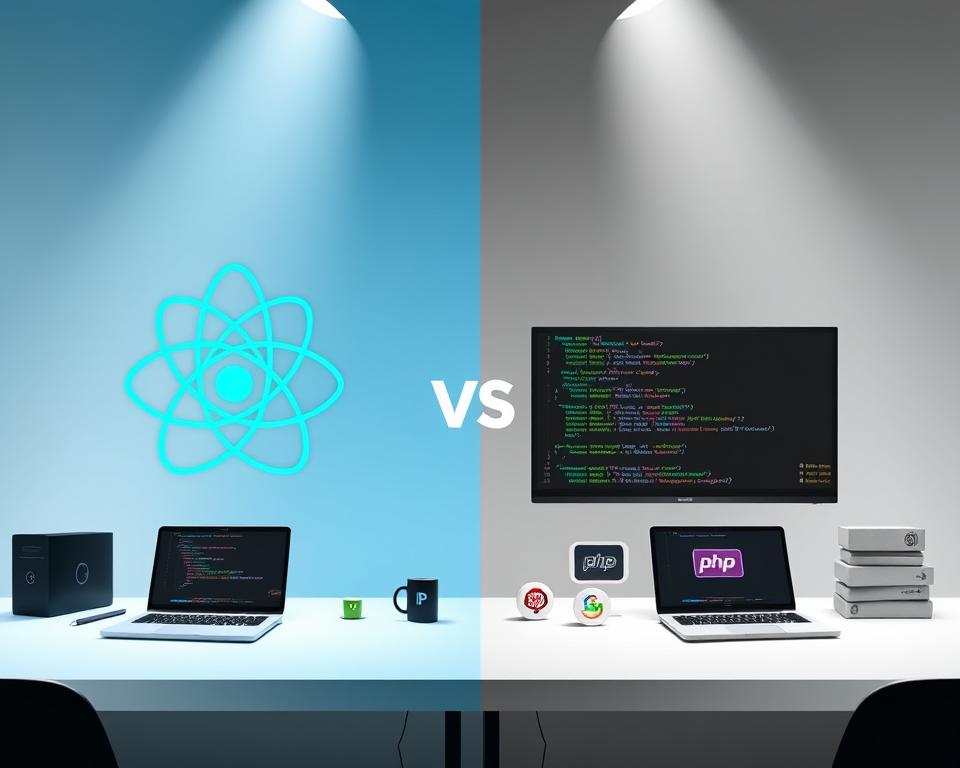
Next.js vs Gatsby vs Create React App
For React-based projects, the choice of framework or tooling is crucial. Next.js is excellent for server-side rendering and static site generation, ideal for SEO-critical apps. Gatsby also focuses on performance and SEO, leaning towards static site generation. Create React App is great for setting up React projects quickly, perfect for smaller apps or prototyping.
Node.js vs Python vs PHP
Choosing the right backend technology is key for web app scalability and performance. Node.js is great for real-time apps with its event-driven, non-blocking architecture. Python is simple and has extensive libraries, making it popular for data-driven and AI apps. PHP is a staple for web development, especially for content management systems like WordPress, due to its maturity and community support.
Full-Stack Frameworks Comparison
Full-stack frameworks offer a complete solution for frontend and backend development. The React-Next-Node stack is a robust full-stack solution. However, frameworks like MEAN (MongoDB, Express.js, Angular, Node.js) and MERN (MongoDB, Express.js, React, Node.js) offer alternative approaches. The choice depends on the project’s specific needs, like the desired frontend framework and backend database integration.
Integration Patterns and Architecture Best Practices
To get the most out of React, Next.js, and Node.js, developers need to follow best practices. They should know how to design APIs, manage state, and handle authentication and authorization. They also need to think about deployment and DevOps strategies.
API Design for React-Node Applications
Creating effective APIs is key for React and Node.js to work well together. RESTful API principles and GraphQL for complex queries are important. APIs should be secure, scalable, and easy to understand.
- Use clear endpoint names and HTTP methods.
- Implement authentication and rate limiting.
- Document APIs with tools like Swagger.
State Management Strategies
Managing state well is essential in React apps. You can use React Context API for simple cases. For more complex needs, Redux or MobX are good choices.
“State management is a crucial aspect of React applications. Choosing the right strategy can significantly impact the maintainability and scalability of your project.”
Authentication and Authorization Patterns
Securing apps means using strong authentication and authorization. JWT (JSON Web Tokens) for authentication and role-based access control for authorization are common.
- Implement JWT for stateless authentication.
- Use role-based access control for authorization.
- Secure sensitive data with HTTPS.
Deployment and DevOps Considerations
Deployment should include using Docker for containerization and Kubernetes for orchestration. Continuous Integration/Continuous Deployment (CI/CD) pipelines are key for automating testing and deployment.
By following these best practices, developers can make sure their apps are scalable, maintainable, and secure.
Getting Started with React, Next.js, and Node.js
As web applications become more interactive and responsive, learning React, Next.js, and Node.js is key. This tech stack helps build fast and efficient apps. With the right help, developers can start quickly.
Setting Up Your Development Environment
First, you need a good development setup. Start by installing Node.js, the base for Next.js and React apps. Make sure you have the latest LTS version of Node.js for the best features and security. Also, pick a code editor or IDE that supports JavaScript and React, like Visual Studio Code, for a better experience.
Learning Resources and Roadmap
For newcomers, many learning resources are available. Start with the official docs for React, Next.js, and Node.js. Online courses on Udemy, Coursera, and FreeCodeCamp offer structured learning. Also, check out open-source projects on GitHub to see how pros organize their apps.
First Project Recommendations
For your first project, make a simple web app like a blog or to-do list. This will teach you the basics of React with Next.js and Node.js. Start simple and add more complexity as you get better with these technologies.
Common Pitfalls to Avoid
Don’t forget to focus on performance from the start. Next.js helps with server-side rendering and static site generation, boosting app speed. Also, watch out for state management issues in React apps. Use libraries like Redux or Context API to manage state effectively.
Common Challenges and How to Overcome Them
The React-Next-Node stack is known for its power, but it also has its own set of challenges. Developers using this stack for web apps need to know these challenges and how to solve them. This knowledge is key to a project’s success.
Performance Optimization
Improving performance is a big challenge. Ways like code splitting, lazy loading, and image optimization can make apps run better. Next.js, for example, helps with image optimization to speed up loading times.
“Optimizing performance is not just about speed; it’s about providing a seamless user experience.” Developers can use tools like WebPageTest and Lighthouse to find and fix slow spots.
State Management Complexities
Handling state in big apps can get tricky. Libraries like Redux or Context API can make it easier. It’s important to pick the right tool for the job.
Security Considerations
Security is a must. It’s important to validate inputs, use secure data transmission, and keep dependencies up to date. Security should be integrated into every stage of development, not treated as an afterthought.
Server-Side Rendering Edge Cases
SSR is great for SEO, but it has its own challenges. Dealing with issues like window undefined errors or async data fetching needs careful planning. Next.js has tools like `getStaticProps` and `getServerSideProps` to help with these problems.
By tackling these common challenges, developers can use the React-Next-Node stack to create strong, scalable, and secure web apps.
Conclusion: Is This Stack Right for Your Next Project?
The React, Next.js, and Node.js stack is a strong choice for web apps. It has many technical and business benefits. Plus, it has success stories to back it up.
Think about your team’s skills, the project’s needs, and how it will grow. This stack is great because it’s full JavaScript, fast, and good for SEO.
Choosing this stack should be a careful decision. Look at your project’s needs closely. This way, you can pick the right Technology Stack Selection for success.